Best AI for Dating Profile Photos: How to Pick One, and the Traps to Avoid
The best AI for dating profile photos is the one that actually looks like you: a recognizable face, natural light, nothing that screams fake. Pick it with 7 criteria (likeness, natural look, variety, clear pricing), keep 4 to 6 varied photos including one sharp headshot, and always check you would be recognized in person.
You have no good photos of yourself, nobody ever takes your picture, and a $250 photographer does not sound fun. So you search for the best AI for dating profile photos and land on ten tools that all promise the same thing. No fake ranking here: nobody can seriously test every tool for you, and a "#1, #2, #3" list is stale in three months. What lasts is knowing what a good AI must do, what it must never do, and how to use it so your photos help instead of costing you matches.
Why use an AI for your profile photos?
Because the photo is the first filter, by a wide margin. A study in the Journal of Communication (2016) found that most users decide to swipe on the first photo alone, without looking at the others. A more recent study (Witmer, Rosenbusch and Meral, 2025) points the same way: improving how attractive the photos look boosts matches far more than improving the bio. These are trends from specific samples, not a promise for you, but the message is clear: if you only have an hour to spend on your profile, spend it on the photos.
The average guy's problem on Tinder is not looks, it is stock: photos from 2019, group shots where nobody can tell which one is him, dark bathroom selfies. An AI can fill that gap. On one condition: it has to start from your real face.
How to choose the best AI for dating profile photos: 7 criteria
Instead of giving you a name that will be outdated next month, here is the grid you can apply to any tool, ours included. Look at published examples, test with a single pack before committing, and score each criterion.
| Criterion | What to look for | Red flag |
|---|---|---|
| Likeness | Friends recognize you at first glance: same face, same haircut, same features | A smoothed or idealized face that could belong to your cousin |
| Natural skin | Visible skin texture, small flaws, pores, believable shadows | Plastic skin, teeth that are too perfect, oddly shiny eyes |
| Hands and details | Normal hands, consistent accessories, believable background | Extra fingers, unreadable text, glasses melting into the face |
| Variety | Several places, outfits, lighting, framings (close-up, wide shot) | Ten times the same pose, same backdrop, same expression |
| Realistic style | Looks like something a friend could have taken | "Ad studio" or "corporate LinkedIn" look on every photo |
| Price and terms | Price shown before you pay, no hidden subscription, clear result | A free trial that quietly turns into a subscription |
| Data and your face | Clear policy on what happens to your face and selfies | No information about deletion or use of your photos |
Likeness comes first: you must be recognizable on date day
This rule matters more than all the others. A gorgeous photo that does not look like you gets paid back on the first date: she has already noticed you look different before you even sit down. And on Tinder, selfie verification compares your face to your photos, so an image too far from you can complicate that badge, which is one of the few levers the app itself has put a number on (Tinder, February 2024 press release: ID-verified profiles got more matches than unverified ones).
Simple test: show your generated photo to two people who know you, say nothing, and ask "is this me?". If either hesitates, move on to the next one. A good AI makes you look like you on a day with good light and a good mood, not like somebody else.
An AI photo that looks natural: what changes everything
The photos that work on apps are described fairly consistently by published analyses: a sharp face, natural light, a real smile, and shots that look taken in the moment. According to Hinge's analysis of its own profiles, looking straight at the camera raises the chance of getting likes, and candid shots do a bit better than posed ones. The smile was tested by Photofeeler on large numbers of ratings: for men, a genuine smile is neutral to positive, while eye contact with no smile is the lowest-rated combination.
Translation for picking your AI: look for photos where you smile the way you really smile, with an ordinary setting (a coffee shop, a park, a street), and avoid images that are too clean, too symmetrical, too "magazine". A successful AI photo is one nobody wonders about.
The 4-step method to use it without getting caught out
- Give it good starting selfies
Daylight, face on then three-quarter view, no sunglasses, no filter, several expressions. The more varied your selfies, the more the AI looks like you.
- Generate a lot, then cut hard
Keep only the images where you instantly recognize yourself. That is often less than half the batch, and that is normal.
- Mix with real photos
One or two real photos, even imperfect ones, reassure people and make the rest believable. Ideally an activity shot or a group shot where you look like you do.
- Test and change one thing at a time
Swap your main photo, wait a week or two, see if matches move. One test at a time, or you will not know what worked.
How many photos and which ones for Tinder?
The research base we work from gives a simple pattern, drawn from app recommendations and published analyses (trends, not laws): 4 to 6 photos, starting with a sharp, smiling, face-on headshot with no sunglasses or hat; then a full-body shot (hiding your body reads as hiding something); a candid; one group photo where people can spot you right away; an activity that starts conversations; and one that shows personality, a trip for example.
With AI the temptation is to fill all six slots with generated images. Don't: one or two real photos keep your profile honest, and the AI should fill what you are missing, not replace you.
- Two people who know you recognize you without hesitating.
- No strange details: hands, teeth, jewelry, glasses, background, text.
- Your main photo is sharp, face on, with a real smile.
- At least one real photo among your 4 to 6.
- Nothing that visibly changes your looks (height, age, an impossible haircut).
- You could show up to a date tomorrow and nobody would be surprised.
The traps of AI-generated photos
The first trap is accidental deception: an over-edited photo makes you look like someone else, and the letdown costs you canceled dates or conversations that stop. The second is sameness: images that are too smooth are quickly spotted as AI, and some users are wary of it. The third is the risk with the app: rules on generated images change, so read the terms of Tinder, Hinge or Bumble before posting, and never get around profile verification.
The last trap is dependence: once you get used to not showing up, you stop taking real photos. The ideal is to use AI as a catch-up, then get into the habit of asking a friend to snap a picture whenever the chance comes up.
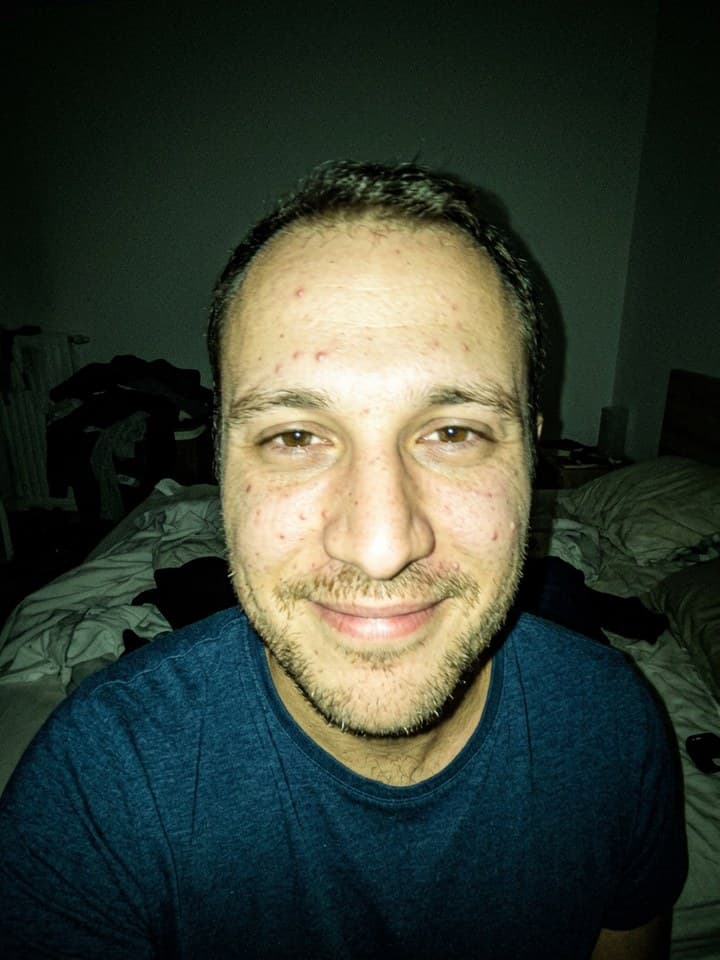 Before
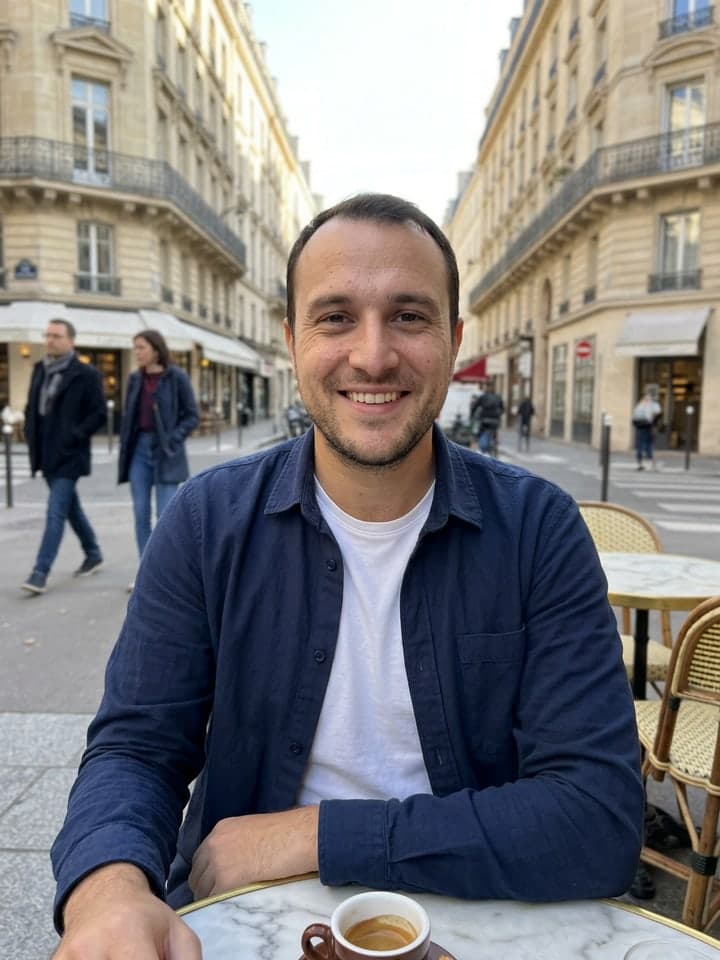 After
So where does SelfRizz fit in?
We have skin in the game, so let's say it. SelfRizz starts from a few selfies and builds natural profile photos, with a look designed to resemble pictures a friend would have taken, not a magazine shoot. The 7 criteria above apply to us like anyone else: look at the examples, check you recognize yourself, and post only what looks like you.
The mistakes that cost you matches with an AI photo
1. Picking the most flattering image instead of the most accurate one. 2. Posting six AI photos and no real ones. 3. Keeping a photo that makes you look ten years younger. 4. Forgetting to check hands and backgrounds. 5. Posing with a car, a private jet or a place that is not yours: it backfires at the first question. 6. Swapping your main photo constantly: give it at least a week before judging. 7. Stopping there: a good photo opens the door, but you still need a first message that makes her want to reply.
What if I would rather use a real photographer or real photos?
That is a good choice too. A photographer, or a friend with a decent phone in daylight on a free afternoon, gives you real, varied photos. AI is mostly useful when nobody can take your picture, or you lack the budget or time. Either way the test is the same: a photo where people recognize you, that shows your real smile, and that makes someone want to show up to the date.
Frequently asked questions
What is the best AI for dating profile photos?
The one that really looks like you and gives a natural result. Compare tools with the table's criteria: likeness, natural skin, hands, variety, clear pricing. A fixed ranking goes stale fast, the grid does not.
Do AI-generated photos work on Tinder?
They can help if they look like you and feel natural, especially if you have no good photo. They hurt if they make you unrecognizable, and you need to follow the app's rules.
Can you use an AI photo on Tinder or Hinge?
Rules on generated images keep changing. Read the terms of the app you use, never get around profile verification, and keep one or two real photos.
How do I know if my AI photo looks natural enough?
Show it to two people close to you without saying anything and ask if it is you. Also check hands, teeth, glasses, background and text. If anything looks off, drop it.
How many AI photos should I keep in my profile?
Do not fill everything with AI. Out of 4 to 6 photos, keep at least one or two real ones, and make your main photo sharp, face on and smiling.